
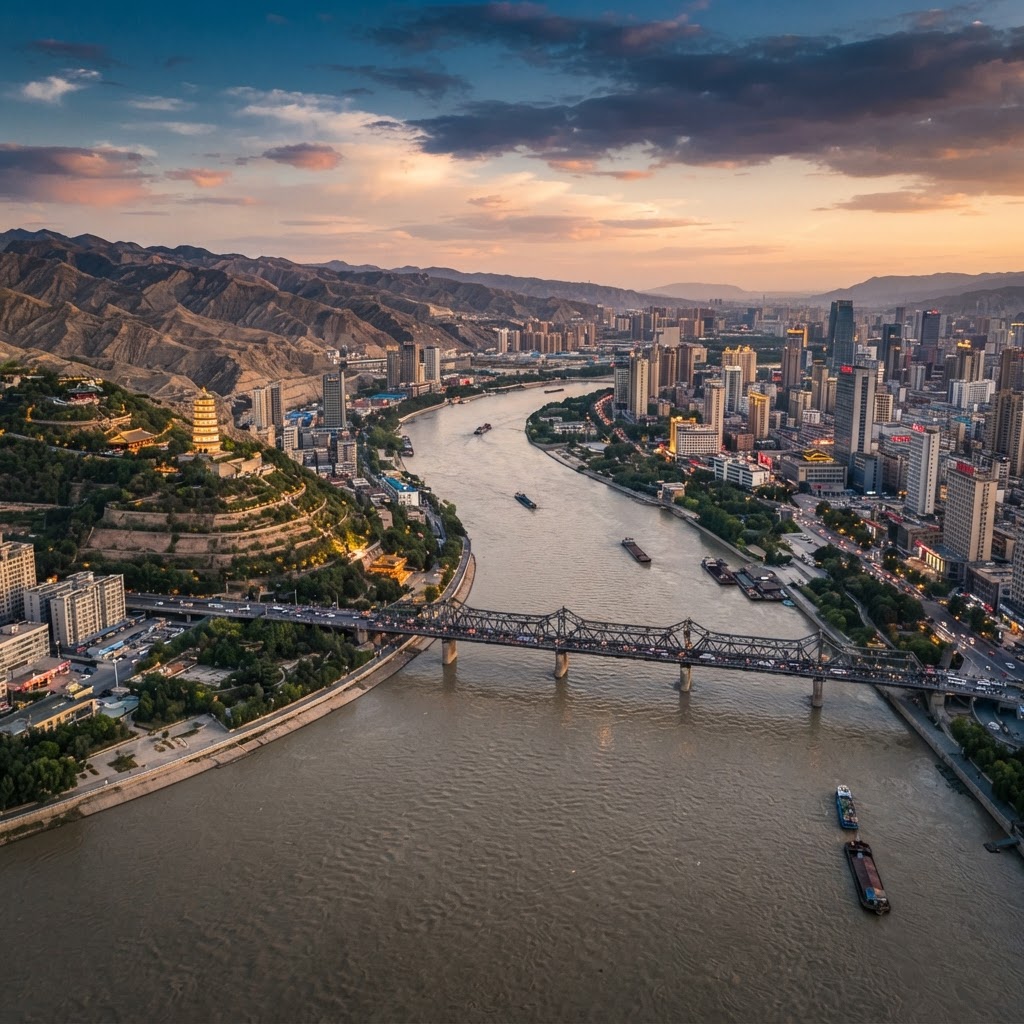
Lanzhou
Lanzhou is the capital of Gansu and the only major Chinese city through which the Yellow River flows — a long, narrow mountain-rimmed city that was a key Silk Road garrison and is now the gateway to northwest China and Tibet. It hosts Lanzhou University, a respected comprehensive institution strong in chemistry, ecology and Central Asian studies. For students it offers genuine northwestern culture, very low costs, a Muslim-Hui culinary heritage, and proximity to the deserts, grasslands and Tibetan plateau of the region.
Why students choose Lanzhou
Lanzhou's student life is authentic and outdoorsy: riverside walks along the Yellow River, the White Pagoda Mountain park, Zhongshan Bridge, the waterwheel museum, beef-noodle breakfasts, and weekend trips to the Mogao Caves and Jiayuguan on the old Silk Road. Lanzhou University's campus is historic. The international student community is small but adventurous; the city is a base for exploring the northwest.
Career & jobs: Lanzhou's economy centres on petrochemicals, non-ferrous metals, nuclear research, and Central Asian trade. Lanzhou University is strong in chemistry, atmospheric science and Central Asian languages. Internships are fewer than the coast but specialised; graduates in energy, chemistry and languages are recruited regionally. The city's role as a Belt-and-Road gateway to Central Asia is growing, creating niche trade and language roles.
What you need to know about Lanzhou
$320/mo
Lanzhou's economy centres on petrochemicals, non-ferrous metals, nuclear research, and Central Asian trade. Lanzhou University is strong in chemistry, atmospheric science and Central Asian languages. Internships are fewer than the coast but specialised; graduates in energy, chemistry and languages are recruited regionally. The city's role as a Belt-and-Road gateway to Central Asia is growing, creating niche trade and language roles.
Lanzhou is safe and traditional, with a friendly northwestern and Muslim-Hui cultural mix. Crime is low; the city is less international than the coast but welcoming. The main environmental note is winter air quality trapped in the valley, which has improved but still warrants caution. Summer sun is intense; bring sun protection at altitude.
Lanzhou's metro is newer and expanding across the narrow river-valley city and to the airport and high-speed-rail stations — Xi'an in 3 hours, Urumqi far to the west. Buses and ride-hailing are cheap. The city is a regional rail hub for northwest China. Transport costs are low; the valley geography makes the city long and linear, so metro is the most efficient cross-town option.
Lanzhou is the home of Lanzhou beef noodles — hand-pulled, served in a clear broth with chili oil, the city's global culinary export. Beyond noodles: lamb, hand-grabbed mutton, milk tea, yellow river carp, and rich Muslim-Hui cuisine. The food is hearty, wheat-based and meat-forward, with Central Asian influences. International dining is limited; the local food is the draw.
Zhongshan Bridge, White Pagoda Mountain, Waterwheel Park, Gansu Provincial Museum, Bingling Temple Grottoes, Yellow River Scenic Area, Xinglong Mountain
Universities in Lanzhou
Fund your studies in Lanzhou
These scholarships apply to students heading to Lanzhou. Check eligibility and apply early.
Guangdong Government Scholarship
Full tuition + stipend + insurance
PartialUniversityFudan University Scholarship
Full tuition + accommodation + stipend + insurance
Fully FundedEnterpriseTencent Scholarship
Partial tuition + internship stipend
PartialUniversityWuhan University Scholarship
Full tuition + accommodation + stipend + insurance
Fully FundedStudent visa for Lanzhou
- X1 visa — long-term (degree programs, valid for the full study period)
- X2 visa — short-term (language and exchange programs up to 180 days)
- JW202 form from your university + admission notice required
- Convert to a residence permit within 30 days of arrival at the local Lanzhou Entry-Exit Bureau
How to apply in Lanzhou
- 1. Choose a university and program in Lanzhou
- 2. Prepare documents (passport, transcripts, recommendation letters, study plan)
- 3. Submit the application and pay any application fee
- 4. Receive admission notice and JW202 form
- 5. Apply for your student visa at the Chinese embassy
- 6. Travel to Lanzhou and register at your university
Applications for September intake usually close in June; spring intake closes in December.: Applications for September intake usually close in June; spring intake closes in December.
Most universities require a high school diploma (Bachelor), a relevant Bachelor (Master), language proficiency (HSK or IELTS), and a valid passport: Most universities require a high school diploma (Bachelor), a relevant Bachelor (Master), language proficiency (HSK or IELTS), and a valid passport.
Partner with us in Lanzhou
Universities and agencies in Lanzhou can partner with StudyInChina to recruit international students.