
Nanchang
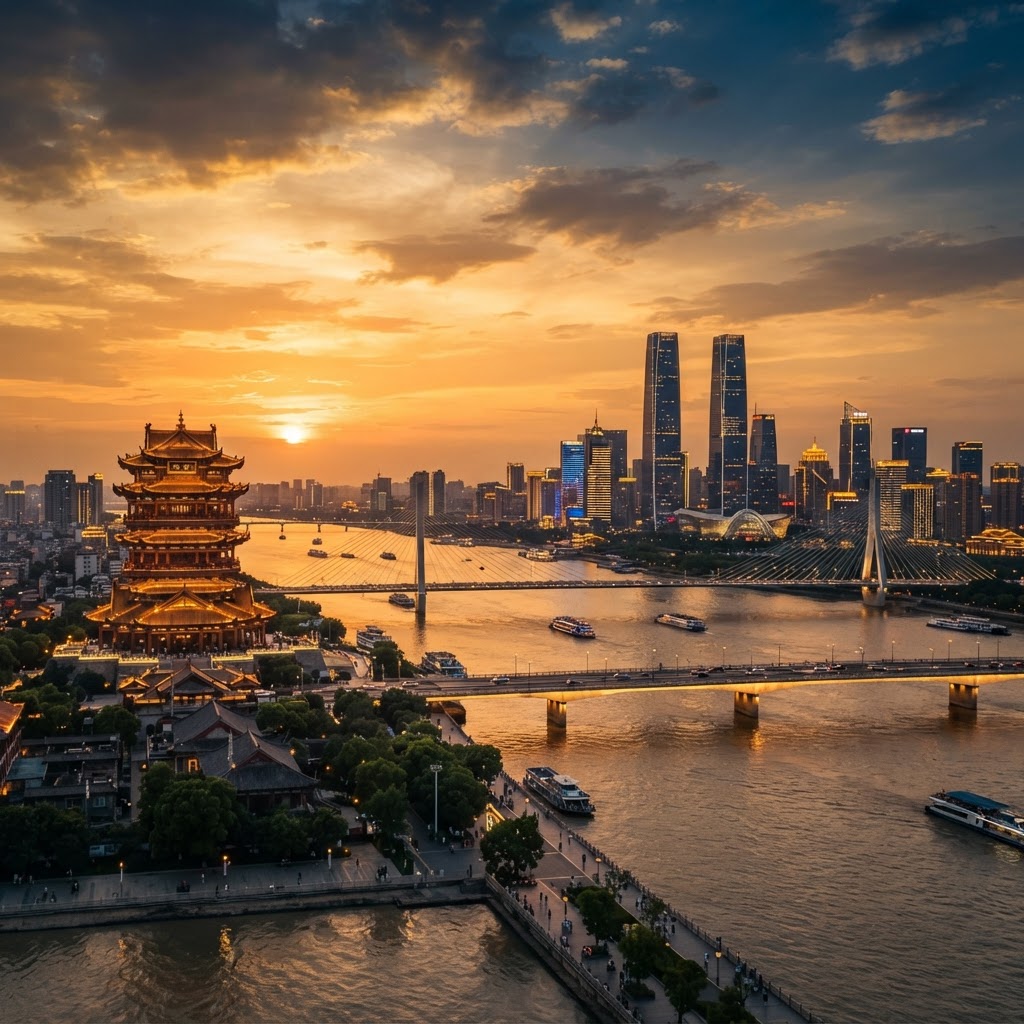
Nanchang is the capital of Jiangxi province and a historic river city on the Gan River, known for the Tengwang Pavilion — one of China's four great towers — and as the birthplace of the People's Liberation Army. It is a mid-sized, affordable city with Nanchang University as its leading institution, strong in food science, materials and medicine. For students it offers authentic central-Chinese life, very low costs, hot summers and a quieter, less international alternative to the megacities.
Why students choose Nanchang
Nanchang's student life is affordable and traditional: Tengwang Pavilion at sunset, the Gan River waterfront, Qiushui Square fountain shows, local night markets, and the large Nanchang University campus cluster. The international student community is small but tightly knit; social life is campus-centred and warm. Living costs are very low, giving students a high quality of life on modest budgets, with easy travel to Jingdezhen and Lushan.
Career & jobs: Nanchang's economy centres on aviation (it hosts China's major civil-aviation manufacturing base, COMAC-related), new energy, food and pharmaceuticals. Internships in manufacturing, materials and food science are accessible at Nanchang University and partners. The local job market is smaller and lower-paid than the coast; many graduates move to Shenzhen or Shanghai, but talent incentives are growing to retain skilled workers.
What you need to know about Nanchang
$350/mo
Nanchang's economy centres on aviation (it hosts China's major civil-aviation manufacturing base, COMAC-related), new energy, food and pharmaceuticals. Internships in manufacturing, materials and food science are accessible at Nanchang University and partners. The local job market is smaller and lower-paid than the coast; many graduates move to Shenzhen or Shanghai, but talent incentives are growing to retain skilled workers.
Nanchang is a safe, traditional and friendly city with low crime. The pace is unhurried and locals are warm to international students, who are still relatively rare here. The main practical note is intense summer heat; otherwise the city is comfortable and orderly.
Nanchang's metro is modern and expanding across the river-divided city and to the airport and high-speed-rail West Station — Shanghai in 4 hours, Guangzhou in 4 hours. Buses and ride-hailing are cheap. The city is a regional hub; transport costs are among the lowest of any provincial capital, and student passes make daily commuting very affordable.
Nanchang cuisine is hearty Jiangxi fare — famously spicy, with rice noodles (Nanchang banfen), stir-fried pork with chili, and river fish. The food is less internationally known than Sichuan but equally fiery; locals pride themselves on heat. Street food and night markets are cheap and generous; international dining is limited, mostly around the university district.
Tengwang Pavilion, Qiushui Square, Shengjin Tower, Badashanren Memorial Hall, Meiling National Forest, Poyang Lake, August 1st Uprising Museum
Universities in Nanchang
Fund your studies in Nanchang
These scholarships apply to students heading to Nanchang. Check eligibility and apply early.
Guangdong Government Scholarship
Full tuition + stipend + insurance
PartialUniversityFudan University Scholarship
Full tuition + accommodation + stipend + insurance
Fully FundedEnterpriseTencent Scholarship
Partial tuition + internship stipend
PartialUniversityWuhan University Scholarship
Full tuition + accommodation + stipend + insurance
Fully FundedStudent visa for Nanchang
- X1 visa — long-term (degree programs, valid for the full study period)
- X2 visa — short-term (language and exchange programs up to 180 days)
- JW202 form from your university + admission notice required
- Convert to a residence permit within 30 days of arrival at the local Nanchang Entry-Exit Bureau
How to apply in Nanchang
- 1. Choose a university and program in Nanchang
- 2. Prepare documents (passport, transcripts, recommendation letters, study plan)
- 3. Submit the application and pay any application fee
- 4. Receive admission notice and JW202 form
- 5. Apply for your student visa at the Chinese embassy
- 6. Travel to Nanchang and register at your university
Applications for September intake usually close in June; spring intake closes in December.: Applications for September intake usually close in June; spring intake closes in December.
Most universities require a high school diploma (Bachelor), a relevant Bachelor (Master), language proficiency (HSK or IELTS), and a valid passport: Most universities require a high school diploma (Bachelor), a relevant Bachelor (Master), language proficiency (HSK or IELTS), and a valid passport.
Partner with us in Nanchang
Universities and agencies in Nanchang can partner with StudyInChina to recruit international students.