
Nanning
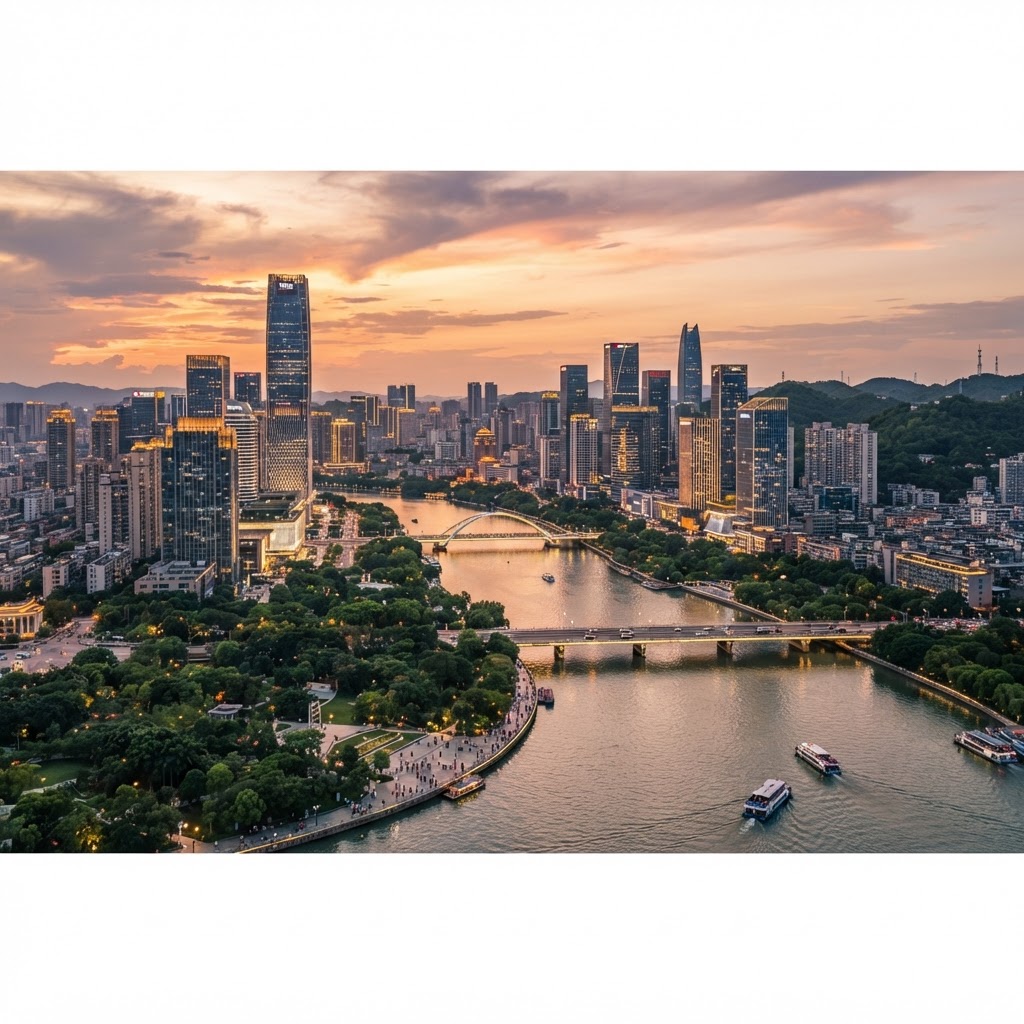
Nanning is the capital of Guangxi and China's gateway to Southeast Asia — a green, subtropical city near the Vietnam border and the ASEAN trade corridor. It hosts Guangxi University as its leading institution and is strong in Southeast Asian studies, agriculture and tropical medicine. For students it offers a warm climate, very low costs, a distinctive Zhuang ethnic-minority culture, and the most Southeast-Asian-flavoured urban experience in China.
Why students choose Nanning
Nanning's student life is green and relaxed: Qingxiu Mountain botanical gardens, Nanhu Lake park, the ASEAN business district, Zhuang ethnic-culture events, tropical-fruit markets, and a strong Southeast-Asian food scene. Guangxi University's campus is large and leafy. The international student community leans Southeast Asian and is warm and social. Living costs are among the lowest of any Chinese city, making for a very comfortable student budget.
Career & jobs: Nanning's economy centres on ASEAN trade, agriculture, tropical medicine, sugar and aluminum. The China–ASEAN Expo makes it a seasonal trade hub. Internships in trade, agriculture and Southeast-Asian-language roles are accessible; the job market is smaller and lower-paid than the coast, but niche ASEAN-trade and language roles are growing. Guangxi University graduates are recruited across the region and into ASEAN-facing firms.
What you need to know about Nanning
$340/mo
Nanning's economy centres on ASEAN trade, agriculture, tropical medicine, sugar and aluminum. The China–ASEAN Expo makes it a seasonal trade hub. Internships in trade, agriculture and Southeast-Asian-language roles are accessible; the job market is smaller and lower-paid than the coast, but niche ASEAN-trade and language roles are growing. Guangxi University graduates are recruited across the region and into ASEAN-facing firms.
Nanning is safe, green and relaxed, with a warm subtropical pace and friendly multi-ethnic culture. Crime is low; the city is welcoming to international students, especially those from Southeast Asia. The main environmental note is high summer heat, humidity and the occasional typhoon; otherwise it is comfortable and orderly.
Nanning's metro is modern and expanding across the city and to the airport and high-speed-rail East Station — Guangzhou in 4 hours, connections toward Vietnam. Buses and ride-hailing are cheap. The city is a regional hub for ASEAN-facing trade and transport; transit costs are low and student passes make commuting affordable.
Nanning cuisine is subtropical and Zhuang-influenced: rice noodles (Laoyou fen — 'old friend noodles'), lemon duck, tropical fruits, sour-spicy dishes, and strong Southeast-Asian flavours thanks to the ASEAN ties. The food is tangy, fragrant and less oily than northern Chinese cuisine; tropical fruit is abundant and cheap. International dining is limited but the local food is distinctive and affordable.
Qingxiu Mountain, Nanhu Park, ASEAN Business District, Detian Waterfall (day trip), Guangxi Museum, Yangmei Ancient Town, Daming Mountain
Universities in Nanning
Fund your studies in Nanning
These scholarships apply to students heading to Nanning. Check eligibility and apply early.
Guangdong Government Scholarship
Full tuition + stipend + insurance
PartialUniversityFudan University Scholarship
Full tuition + accommodation + stipend + insurance
Fully FundedUniversityZhejiang University Scholarship
Full tuition + monthly stipend + insurance
Fully FundedUniversityShanghai Jiao Tong University Scholarship
Partial to full tuition + stipend
PartialStudent visa for Nanning
- X1 visa — long-term (degree programs, valid for the full study period)
- X2 visa — short-term (language and exchange programs up to 180 days)
- JW202 form from your university + admission notice required
- Convert to a residence permit within 30 days of arrival at the local Nanning Entry-Exit Bureau
How to apply in Nanning
- 1. Choose a university and program in Nanning
- 2. Prepare documents (passport, transcripts, recommendation letters, study plan)
- 3. Submit the application and pay any application fee
- 4. Receive admission notice and JW202 form
- 5. Apply for your student visa at the Chinese embassy
- 6. Travel to Nanning and register at your university
Applications for September intake usually close in June; spring intake closes in December.: Applications for September intake usually close in June; spring intake closes in December.
Most universities require a high school diploma (Bachelor), a relevant Bachelor (Master), language proficiency (HSK or IELTS), and a valid passport: Most universities require a high school diploma (Bachelor), a relevant Bachelor (Master), language proficiency (HSK or IELTS), and a valid passport.
Partner with us in Nanning
Universities and agencies in Nanning can partner with StudyInChina to recruit international students.