
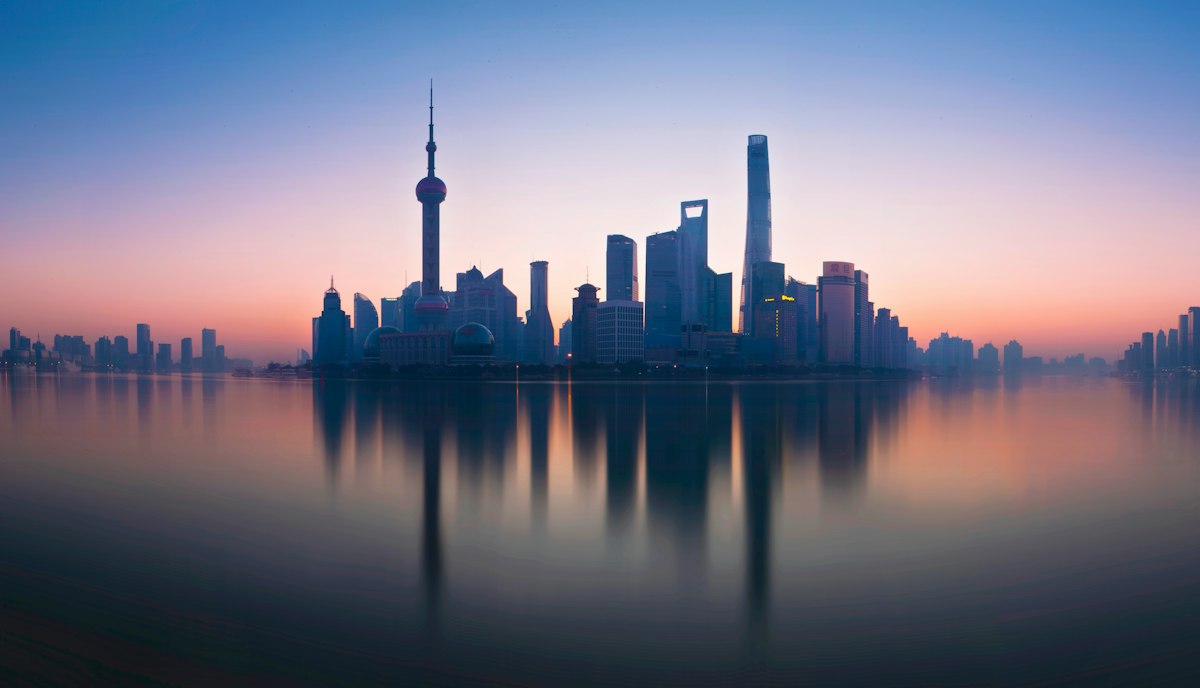
Shanghai
China's financial powerhouse and most cosmopolitan city, Shanghai is a global skyline of 200+ skyscrapers built on a century of foreign-trade heritage. The Bund, the French Concession and Lujiazui define one of Asia's most international urban experiences. For students it offers world-class universities (Fudan, SJTU, Tongji), the largest foreign community in China, the easiest city in the country to live in with little Mandarin, and a launchpad into finance, consulting, fashion, media and tech careers with direct global connectivity.
Why students choose Shanghai
Life in Shanghai blends global culture with Chinese energy: rooftop bars on the Bund, indie cafés in the French Concession, gallery nights in West Bund, late-night dumplings, the Shanghai International Film Festival, jazz at JZ Club, designer markets in Jing'an, and a relentless calendar of international meet-ups, hackathons and startup weekends. Campuses are green and modern, and the foreign-student networks are the biggest in China.
Career & jobs: As the HQ of most foreign banks, consultancies and luxury brands, plus domestic giants PDD, Bilibili and Ctrip, Shanghai leads in finance, marketing, e-commerce, design and consulting internships. English-language roles are the most plentiful in China; Chinese speakers unlock operations, supply chain and B2B sales. The city's talent hukou points system favours graduates of top local universities.
What you need to know about Shanghai
$750/mo
As the HQ of most foreign banks, consultancies and luxury brands, plus domestic giants PDD, Bilibili and Ctrip, Shanghai leads in finance, marketing, e-commerce, design and consulting internships. English-language roles are the most plentiful in China; Chinese speakers unlock operations, supply chain and B2B sales. The city's talent hukou points system favours graduates of top local universities.
Shanghai is exceptionally safe. Street crime is rare, women walk alone at night without issue, and neighbourhoods stay lively past midnight. Watch for overpriced taxis near bars and the occasional tea-house scam targeting tourists; otherwise the city is among the most secure mega-cities on earth.
Shanghai runs the world's longest metro network — over 80 stations on 19 lines — plus the 430 km/h maglev to Pudong airport, an extensive bus system, and the highest density of high-speed rail connections in China (to Hangzhou in 45 min, Nanjing in 1 h, Beijing in 4.5 h). Shared bikes saturate the streets. English signage in stations is excellent and digital payments are universal.
Shanghai's food is delicate and sweet-savoury: xiaolongbao (soup dumplings), shengjian bao (pan-fried buns), hairy crab in autumn, braised pork, scallion-oil noodles. The city is also China's most international dining capital — every world cuisine is represented at every price point, with strong Japanese, French, Southeast Asian and vegetarian scenes near Jing'an and the French Concession.
The Bund, Oriental Pearl Tower, Yu Garden, Nanjing Road, Zhujiajiao Water Town, French Concession, Shanghai Museum
Universities in Shanghai
Shanghai University of Finance and Economics
East China Normal University
Tongji University
Shanghai Jiao Tong University
Fudan University
Fund your studies in Shanghai
These scholarships apply to students heading to Shanghai. Check eligibility and apply early.
Guangdong Government Scholarship
Full tuition + stipend + insurance
PartialUniversityFudan University Scholarship
Full tuition + accommodation + stipend + insurance
Fully FundedEnterpriseTencent Scholarship
Partial tuition + internship stipend
PartialUniversityWuhan University Scholarship
Full tuition + accommodation + stipend + insurance
Fully FundedStudent visa for Shanghai
- X1 visa — long-term (degree programs, valid for the full study period)
- X2 visa — short-term (language and exchange programs up to 180 days)
- JW202 form from your university + admission notice required
- Convert to a residence permit within 30 days of arrival at the local Shanghai Entry-Exit Bureau
How to apply in Shanghai
- 1. Choose a university and program in Shanghai
- 2. Prepare documents (passport, transcripts, recommendation letters, study plan)
- 3. Submit the application and pay any application fee
- 4. Receive admission notice and JW202 form
- 5. Apply for your student visa at the Chinese embassy
- 6. Travel to Shanghai and register at your university
Applications for September intake usually close in June; spring intake closes in December.: Applications for September intake usually close in June; spring intake closes in December.
Most universities require a high school diploma (Bachelor), a relevant Bachelor (Master), language proficiency (HSK or IELTS), and a valid passport: Most universities require a high school diploma (Bachelor), a relevant Bachelor (Master), language proficiency (HSK or IELTS), and a valid passport.
Partner with us in Shanghai
Universities and agencies in Shanghai can partner with StudyInChina to recruit international students.